
What’s in season
Farmers’ markets, produce stands and backyard gardens are some of the best places to get seasonal fruits and vegetables. In fall, we eagerly visit apple orchards to pick, or pick up, a bushel or a peck (we love both). With our freshly picked fruits, pumpkins, squash and other fresh root vegetables, we make seasonal salads, pies and other delicious dishes from recipes passed down through generations. Aside from pleasing your tastebuds, there are benefits to eating what’s in season.
Health benefits of eating what’s in season
Seasonal food is typically fresher, tastier and more nutritious than eating it when it’s out of season. Vegetables and fruits out of season in our area are typically picked early to ripen on the long journey to our grocery stores. Researchers at Montclair State University found that the vitamin C content of broccoli is cut in half when it’s shipped out of the country compared to when it’s sourced locally.
Locally grown fruits and vegetables last longer in the fridge and on countertops. That’s because they’re harvested and in your hands well before produce from a different state or country. Produce that can fully ripen on the vine has more nutrients, making it healthier for us to eat. Buying local produce tastes better, lasts longer and has a higher nutritional value. That sounds like a win-win-win.
What’s in season in the fall?
There are plenty of delicious, nutritious foods harvested this time of year. Here’s a list that includes the vitamins and minerals in many fall favorites, courtesy of the United States Department of Agriculture:
Apples – a great source of vitamin C, fiber and antioxidants.
Cabbage – contains antioxidants, calcium and vitamin B.
Cauliflower – a good source of folate, vitamins B, C and potassium.
Potatoes – a good source of potassium and vitamin C.
Pumpkins – rich in vitamins A, B1, B6, C and E, potassium and the antioxidant beta carotene.
Winter Squash– rich in vitamins A and C.
Supporting local farmers is good for the economy and our health. It’s also reassuring to know where our food comes from by buying locally.
Genesis HealthCare System’s Health and Wellness content conveniently provides accurate and helpful information. Your health history and current health may impact suggestions provided through our Health and Wellness content. Although we hope this information is helpful, it is not a substitute for your doctor's medical advice. Before making any significant changes, please consult your doctor.

Aside from pleasing your tastebuds, there are benefits to eating what’s in season.
Exclude From Search
No
How to combat motion sickness
Are you planning a fall cruise, road trip or vacation? Don’t let motion sickness bring your plans to a halt. It’s reported that one in three people are prone to motion sickness, so it’s a good idea to be prepared before you hit the road (or the high seas.)
What causes motion sickness?
According to the Centers for Disease Control and Prevention, motion sickness happens when the movement you see with your eyes is different than the movement your inner ears sense. This mishap can result in dizziness, nausea, irritability and even vomiting. Yuck. Thankfully, there are ways to ease your symptoms and maybe prevent them altogether.
Try these tips and tricks:
If you’re in a car or bus, try to sit as close to the front as possible. Facing the direction you’re traveling and focusing on a non-moving object can ease your queasiness.
If you’re on a boat, cruise ship or airplane, stick to the middle of the vessel. This will help reduce the ups and downs of the water or air.
Hydration helps. Avoid alcoholic beverages and caffeine until the chance of motion sickness subsides.
Bring lozenges or mints to ease your tummy.
Listen to music to distract yourself.
Who suffers the most?
Children are especially at risk of suffering from motion sickness, and it appears to run in families. There are hundreds of parent posts on social media dedicated to both natural and medicinal remedies. Many parents says that it’s often a case of trial-and-error to find something that works. Check with your family doctor if giving an over-the-counter product to a child under the age of 18 is suggested.
According to a 2018 study published in the National Library of Medicine, antihistamines with the lowest level of sedation are the treatment of choice for adults experiencing vertigo, nausea and vomiting.
The U.S. Travel Association predicts domestic leisure travel will increase through 2024. Hopefully, you’ll be taking a trip to see friends, spend time with family or visit a destination you’ve always wanted to explore. Bookmark this article to keep motion sickness at bay when you’re on an adventure.
Genesis HealthCare System’s Health and Wellness content conveniently provides accurate and helpful information. Your health history and current health may impact suggestions provided through our Health and Wellness content. Although we hope this information is helpful, it is not a substitute for your doctor's medical advice. Before making any significant changes, please consult your doctor.

Are you planning a fall cruise, road trip or vacation? Don’t let motion sickness bring your plans to a halt.
Exclude From Search
No
Turkey stuffed peppers
Ingredients:
- 6 large bell peppers
- 1 cup low-sodium chicken broth, divided
- ¼ cup tomato sauce
- 1 ½ cups cooked brown rice
- 6 tablespoons low-fat, sharp cheddar cheese, shredded
- 1 lb. 93% lean ground turkey
- 2 garlic cloves, minced
- 1 medium onion, minced
- 1 teaspoon cumin powder
- ¼ teaspoon salt (optional)
- ¼ teaspoon pepper
Instructions:
- Heat oven to 400°F.
- Lightly spray olive oil in a medium nonstick skillet on medium heat.
- Add onion and garlic and sauté for 2 minutes. Add ground turkey, salt, pepper and cumin and cook for approximately 5 minutes until the meat is cooked.
- Add ¼ cup of tomato sauce and ½ cup of chicken broth, mix well and simmer on low for about 5 minutes.
- Turn off the heat and add cooked brown rice.
- Cut the tops off the peppers. Remove all seeds. Spoon the meat mixture into each pepper evenly. Place peppers in a 9 x 13-inch baking dish.
- Pour the remainder of the chicken broth on the bottom of the pan. Cover with aluminum foil and bake for about 35 to 40 minutes or until the internal temperature is 165 degrees Fahrenheit.
- Remove from the oven, add a tablespoon of shredded cheese to the top of each pepper, and bake for 5 minutes or until the cheese is melted.
Nutritional information:
- Calories: 499 calories
- Total Fat: 35 g
- Sodium: 946 mg
- Cholesterol: 131 mg
- Carbohydrates: 24 g
Approved by:
Maurine Maneely,
Registered Dietitian
Find more recipes at genesishcs.org/eatwell.
Genesis HealthCare System’s Health and Wellness content conveniently provides accurate and helpful information. Your health history and current health may impact suggestions provided through our Health and Wellness content. Although we hope this information is helpful, it is not a substitute for your doctor's medical advice. Before making any significant changes, please consult your doctor.

Try this delicious fall recipe.
Exclude From Search
No
Got (Dairy-Free) Milk?
The question, “Got milk?” now comes with a follow-up question: “What kind of milk?” Due to dietary allergies, intolerances, diet preferences and environmental concerns, many people are turning from cow’s milk and drinking plant- and nut-based milk alternatives. The number of people with dairy-related digestive issues continues climbing. Experts estimate that 68% of the world’s population struggles with lactose absorption.
Thankfully, in recent years, a plethora of milk replacements have become available and accessible. Dairy-free milk products span from soy, coconut, almond, oat, rice, pea, hemp and quinoa bases. These diverse dairy-free products come in various brands, product types and flavors, which also means a variety in nutritional value.
Dairy-free milk alternatives are not equal in nutritional value
In April 2022, McGill University published a new study comparing the nutrition in cow’s milk to the four most common milk alternatives: almond, rice, soy and coconut milks. While cow’s milk came out with the highest nutritional value, researchers recognized unsweetened soy milk as the most nutritious dairy-free milk option.
In the McGill University study, researchers found that pea- based drinks contained the most phosphorus (which helps create, maintain and repair tissues and cells), selenium (which helps make DNA and protects against infections) and zinc (which helps create DNA, builds proteins and supports a healthy immune system).
The study also showed that soy milk contained the most magnesium (which supports our muscle and nerve functions) and protein.
Pick your milk options carefully
Nutritional value varies from brand to brand amongst dairy-free milks. Even within the same alternative milk base and the same brand, there are differences. That’s why it’s important to read labels carefully. While manufacturers may fortify some dairy- free milks with vitamins and minerals, others come with added sugars or artificial sweeteners. For example, many almond and hemp milks contain 13 g of sugar per cup. Paying close attention to labels will help you milk the most nutrition out of your milk alternative.
Genesis HealthCare System’s Health and Wellness content conveniently provides accurate and helpful information. Your health history and current health may impact suggestions provided through our Health and Wellness content. Although we hope this information is helpful, it is not a substitute for your doctor's medical advice. Before making any significant changes, please consult your doctor.
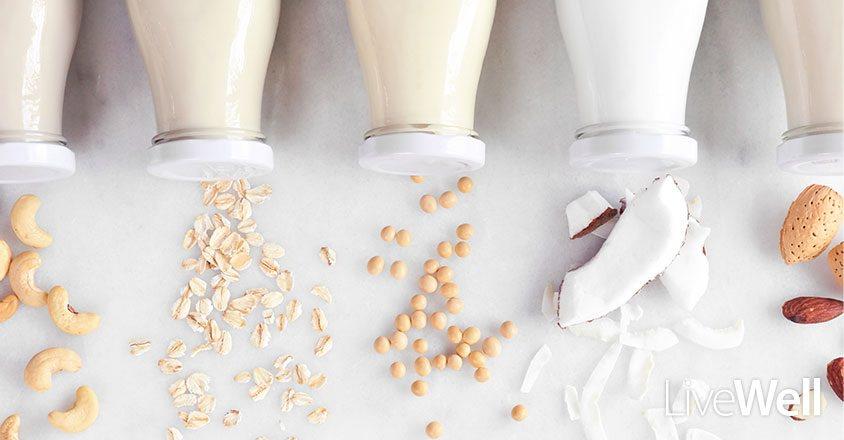
Discover the healthiest milk alternative.
Exclude From Search
No
Solutions for common foot problems for women
Your feet do a lot of work. Whether walking, standing or exercising, your feet put in long hours. Here’s a look at some of the most common foot problems for women and ways to reduce foot pain.
Possible pain points
1. Adult-onset flat feet
- When the posttrial tibial tendon, which helps hold up your arch, begins to break down, it can cause a painful flattening of the arch. Symptoms might include pain and swelling, often on the outside of the ankle. If not treated, the pain can intensify.
2. Heel pain
- Heel pain tends to be caused by overuse, so the best treatment is prevention. Experts suggest replacing athletic shoes after they have about 300 miles on them, even if they still look new.
3. Nerve problems
- Sometimes compressed nerves in other parts of the spine or legs can also cause foot symptoms. Be sure to tell your physician about any other problems you’re having when seeking help for foot problems.
4. Bunions
- Bunions begin with a leaning of the big toe, gradually changing the angle of the bones over the years and slowly producing the characteristic bump.
5. Plantar Fasciitis
- Heel pain is often caused by plantar fasciitis. Faulty foot structure is the most common cause of plantar fasciitis. In women, it may result from wearing nonsuppurative shoes, such as flip-flops and ballet flats.
How to Avoid Foot Pain
1. Try a foot bath
- Warm water and Epsom salts may be just the ticket to alleviate foot pain and sore muscles. It can even reduce swelling in your feet.
2. Stretch
- Try stretching exercises to help your sore feet. Stretching can prevent cramping and promote flexibility.
3. Exercise
- Keeping your feet flexible and strong is key to avoiding foot pain. Walking regularly for exercise is the best way to keep your feet limber and healthy.
4. Switch your shoes
- Your shoes could be the culprit of your foot pain. Wearing shoes beyond their life span, the wrong style or an incorrect shoe size can impact the health of your feet.
5. Ice your feet
- Icing your feet can reduce inflammation that causes soreness. Apply ice to sore feet by filling a plastic bag with ice or rolling your feet on a frozen water bottle. Try to ice the affected area for 5 to 15 minutes a few times a day to help reduce inflammation.
6. Contact your doctor
- Contact your doctor if you suspect a more severe foot condition or if you have severe foot pain. If you have diabetes and experience foot pain, call your doctor immediately.
Genesis HealthCare System’s Health and Wellness content conveniently provides accurate and helpful information. Your health history and current health may impact suggestions provided through our Health and Wellness content. Although we hope this information is helpful, it is not a substitute for your doctor's medical advice. Before making any significant changes, please consult your doctor.

Here’s a look at some of the most common foot problems for women and ways to reduce foot pain.
Exclude From Search
No
Five ways to stay active during winter
When it’s too cold, icy or cumbersome to take that walk around your block, consider this: One and a half hours of strength exercise a week in the comfort of your home can account for the walk you might be missing out on due to bad weather. A study at the University of Michigan showed that 95% of participants confirmed that adverse weather curtails their workout, which is why we suggest strength training indoors during the cold season.
Many may have an at-home gym. For those who don’t, the weight training we refer to requires little to no equipment. It ranges from using your body weight and adding resistance bands to small dumbbells. The National Institute of Health suggests that weight training exercises performed intermittently will lessen the risk of cardiovascular disease.
“Patients who perform aerobic exercises have a lower risk of developing heart disease compared to those who aren’t as active,” said Duane Pool, M.D., Board-certified in Cardiovascular Disease, at Genesis Heart Lung & Vascular Institute.
Before you try out our top five indoor strength exercises, check with your doctor first for the regimen that’s right and safe for you.
Deep squats
Squats are a great way to build your quad muscle. When muscle mass increases, it encourages oxygen circulation and alleviates the load on the heart. Start by standing with your legs shoulder-width apart and dip both hips in a downward motion as if sitting on an invisible chair. Hold the position, raise and repeat.
Wall pushups
Wall pushups are a great way to tone the arms. Stand arm’s length away from a wall while facing it. Stretch your arms. Keep your palms against the wall, shoulder-width apart. Using your body weight, push yourself toward and away from the wall.
Leg lifts
Resistance bands are budget-friendly and easy to use. Best of all, it does not take up storage space. Wear a resistance band around your ankle.
Lie on your right side with your legs straight. Lift your left leg up and down, keeping your left leg parallel to your right. Switch to the opposite side and repeat.
This exercise will tighten the core and lower body.
All Fours
This is another great workout that tones the core and lower body.
Place your hands and knees flat on the floor. Keep your back straight and lift one leg up as if you’re stomping the ceiling.
Bicep Curl
Our final pick is your traditional curl with a 5-10 lb. dumbbell. Stand with your back straight and pull your forearm in toward you and away from your body.
Genesis HealthCare System’s Health and Wellness content conveniently provides accurate and helpful information. Your health history and current health may impact suggestions provided through our Health and Wellness content. Although we hope this information is helpful, it is not a substitute for your doctor's medical advice. Before making any significant changes, please consult your doctor.
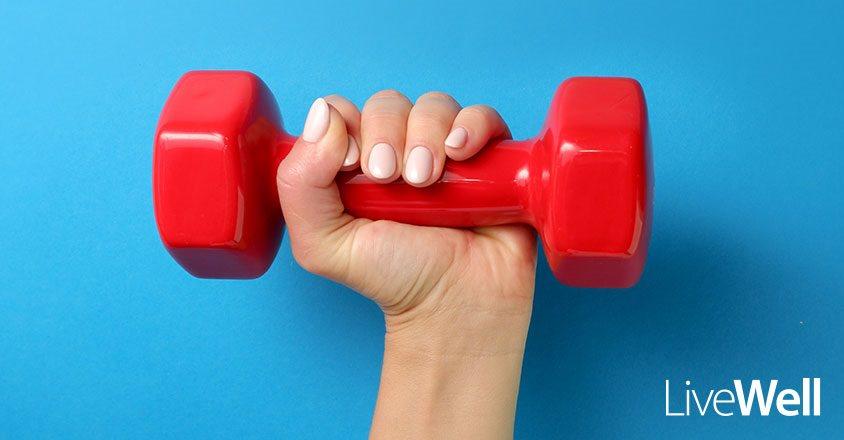
The National Institute of Health suggests that weight training exercises performed intermittently will lessen the risk of cardiovascular disease.
Exclude From Search
No
New year, new you?

Megan Miller, D.O.
Genesis Primary Care
It’s that time of year when we recently made resolutions to lose or maintain weight. Is a New Year’s resolution the best way to manage weight? Megan Miller, D.O., Genesis Primary Care, gives us an answer and provides tips to help us achieve our weight goals.
New Year’s resolutions
New Year’s resolutions are a great way to encourage change but making a resolution to lose weight isn’t always a good idea. Focusing on weight can result in giving up on the resolution easily when results aren’t seen. I encourage patients to refocus their goals towards daily attainable feats. Ideas include eating more fruits and vegetables, drinking more water (instead of sugary drinks), or being more active.
Fad diets and more
Extreme fad diets are rarely sustainable over the long term. I encourage patients to make changes to their eating habits that they can maintain forever. Even subtle changes will result in gradual weight loss over time. I encourage the concepts of intermittent fasting and low carbohydrate diets. A simple form of intermittent fasting would be to limit the hours of the day when you eat. For the best results, make it earlier in the day. For example, eat between 7 a.m. and 3 p.m. or even 10 a.m. and 6 p.m. Then fast the rest of the day.
For low carbohydrate diets, focus meals around lean meats like chicken, fish or lean beef and choose fresh vegetables. Avoid pastas, breads and potatoes. Shifting your food choice at meals will help you make small changes that can result in weight loss over the long run.
Nutritional plan
A balanced nutritional plan is important when trying to lose weight. Pay attention to portion size. Portions smaller than the size of your palm for meat servings and smaller than the size of your fist for most other foods are best. You also want to eat whole foods rich in natural vitamins and antioxidants, which are important for maintaining a healthy body.
Exercise
Daily exercise is important to be healthy and aids in weight loss when you are also following a healthy diet. I recommend 30 minutes of exercise every day. Cardio-type exercise is preferred. For those who are just starting out on an exercise program, a brisk 30-minute walk is the easiest way to get started. After some time, as you become more in shape, increasing your pace (even jogging) will help increase cardio intensity. Incorporating yoga, Pilates or some simple stretching in between workouts helps reduce stress and increase flexibility. These are important for overall health.
Keeping the weight off
If you want to maintain your current weight, be consistent. Try to get the same amount of sleep and drink plenty of water daily. Carve out your 30 minutes of exercise and focus on making good food choices. Try to eat early in the day. Also take time to relax and reduce stress each day.
Consult your physician
If you are considering drastically changing your eating habits or starting an exercise routine, I recommend consulting your physician first.

Dr. Megan Miller's tips for weight loss.
Exclude From Search
No
Is your home contagious?
Home is a refuge to feel safe and comfortable. However, it is easy to overlook cleaning certain items often enough to keep your home safe. Learn more by taking our quiz below.
Genesis HealthCare System’s Health and Wellness content conveniently provides accurate and helpful information. Your health history and current health may impact suggestions provided through our Health and Wellness content. Although we hope this information is helpful, it is not a substitute for your doctor's medical advice. Before making any significant changes, please consult your doctor.

Home is a refuge to feel safe and comfortable. However, it is easy to overlook cleaning certain items often enough to keep your home safe.
Exclude From Search
No
After-school dinner on the go
Your daughter is at cross-country practice until 5:30 p.m. Your son has a soccer game at 6 p.m. When you get home, you need to wash laundry if you don’t want your house to smell like a locker room.
It will be late, and everybody will be hungry. Actually, starving if you listen to your children. The easy thing to do is stop at the drive-thru for their favorite combo meal or order a pizza. However, frequently eating out can create unhealthy eating habits. Teenage athletes often burn through excess calories, but as they age and slow down, those habits will stay with them, and it can eventually lead to weight gain, heart disease and diabetes.
You know how important nutrition is, especially to teenagers, and even more so for teenage athletes. So, plan and prepare meals with various healthy foods to eat on the go and when they get home.
To make it easy for everyone, place each meal in a separate safe-togo package. Then on the way out the door, everyone can grab their lunch, dinner, or snack to avoid getting hangry.
For athletes, include food high in calcium and iron. The calcium will support strong bones and help avoid fractures while they are running, jumping and falling. Iron found in lean meat, fish, chicken and leafy green vegetables will carry oxygen to the muscles.
Also, include protein for muscle growth and carbohydrates to give them energy. It’s tempting to slip a candy bar or soda into a meal to make children happy but avoid adding sweets so they can prevent the crash that comes after consuming sugar.
“Eating healthy during busy sports seasons takes planning. If you do, you’ll help your family in the long run by helping them avoid illness and lessen their chances of injuries. You’ll also get to see them perform at their top level,” said Anastasia Gevas, D.O., Genesis Primary Care.
Genesis HealthCare System’s Health and Wellness content conveniently provides accurate and helpful information. Your health history and current health may impact suggestions provided through our Health and Wellness content. Although we hope this information is helpful, it is not a substitute for your doctor's medical advice. Before making any significant changes, please consult your doctor.
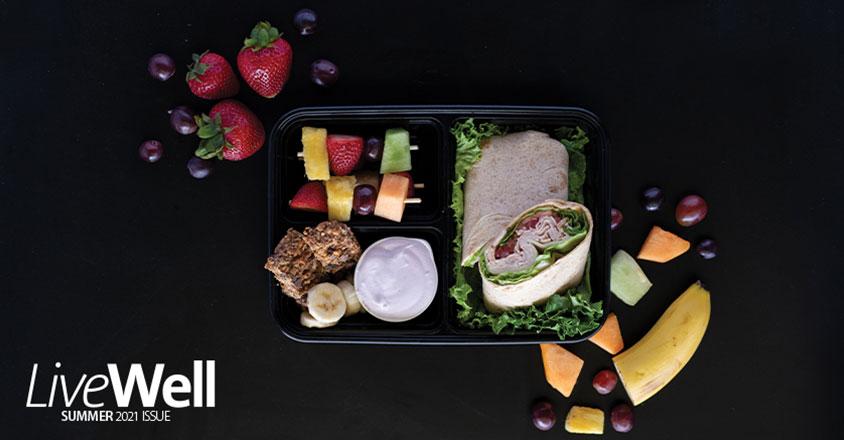
You know how important nutrition is, especially to teenagers, and even more so for teenage athletes. So, plan and prepare meals with various healthy foods to eat on the go and when they get home.
Exclude From Search
No
Tips to prevent children's sports injuries
When you’re the parent of an active child, you know that injuries are a part of the game. While you can’t protect your young athlete from every injury, you can try to minimize the risk with a few basic steps.
“It’s important to begin by making sure your child can participate in sports. We recommend children have a sports physical before they start – even if they’re younger than junior high age,” said Thai Trinh, M.D., fellowship-trained and board-certified orthopedic sports medicine surgeon, Genesis Orthopedic Sports Medicine. “If your child has an illness or problem with lungs, heart, vision, hearing, strength or movement, we can tell you how you can manage the problem so your child may still be able to be active.”
Reduce common injuries
Most sport-related injuries are from impact, overuse or poor body mechanics. To reduce your child’s risk of injury, you can:
• Always use the right safety gear. Learn about the proper fit of that gear. Replace it as your child grows.
• Make sure your child learns proper form and technique from a class, trained coach or athletic trainer.
• Teach your child to take pain and tiredness seriously and not ignore or “play through” it.
Avoid high-risk activities
Some activities are so high-risk that child health experts warn strongly against them. These include boxing, driving or riding on motorized bikes and vehicles and using trampolines. Even with constant adult supervision and protective netting, many children are injured on them.
Wear safety gear
Safety gear helps protect your child. Before your child starts a new activity, get the right safety gear and teach your child how to use it. Depending on the sport or activity, your child may need these items:
• Helmets help protect against injury to the skull. Brain damage is still possible even when a helmet is worn. Use a helmet for any activity that can cause a fall or an impact to the neck or head, such as bike riding, football, baseball, ATV riding or skateboarding.
• Shoes help protect feet from injury. Sandals or flip-flops are not safe for bike riding. Some sports require special shoes for support and safety.
• Mouthguards help prevent mouth and dental injuries. Use a mouth guard for sports such as basketball, football, wrestling, martial arts, gymnastics, baseball and soccer.
Prevent dehydration and heat-related illness
When your child is active and not drinking enough fluids, dehydration is a risk. The muscles get tired quickly, and your child may have leg cramps while walking or running. Playing hard and sweating without drinking fluids can cause dehydration and overheating. To prevent dehydration, teach your child to:
• Do activities during the coolest times of the day.
• Drink water throughout the day, every day.
• Drink extra water before, during and after exercise.
• Take breaks and drink at least every 15 to 20 minutes during exercise.
• Stop and rest if dizzy, lightheaded or very tired.
• Wear clothes that help cool the body.
• Water is the best choice for children and teens. A sports drink may be helpful if your child has exercised intensively or for a long time.
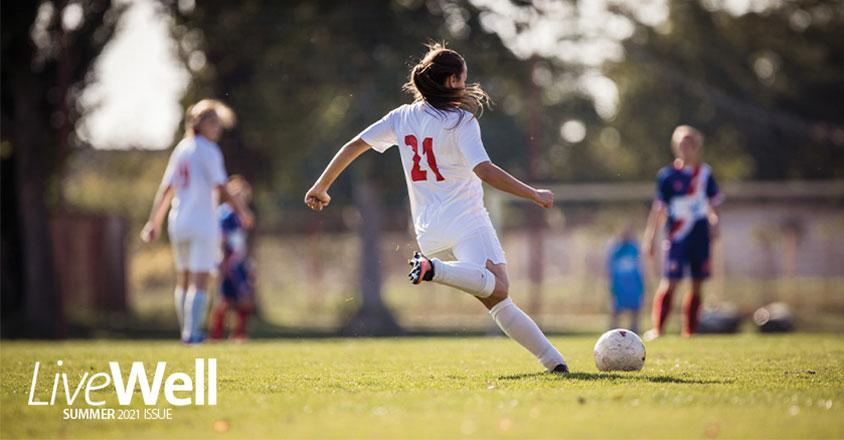
While you can’t protect your young athlete from every injury, you can try to minimize the risk with a few basic steps.
Exclude From Search
No