Genesis sheds light on patient’s blackout

82-year-old Charles Dean and his wife of 59 years, Katherine, live on a small farm in the northeast part of Licking County, Ohio, about 15 miles from Zanesville.

In the spring of 2017, Charles found himself taking naps frequently, but something didn’t feel quite right.

“I soon realized I wasn’t actually napping, but instead was having blackouts,” explained Charles.

A “blackout” is a temporary loss of consciousness, also called fainting, passing out, or in the medical world, syncope.

In some cases, low blood pressure causes these episodes. However, they can also be a symptom of an abnormal heart rhythm, which can result in a heart rate that is too fast or too slow to provide adequate blood flow to the brain. In these situations, blackouts may be a sign of a life-threatening problem.

Electrophysiology at Genesis

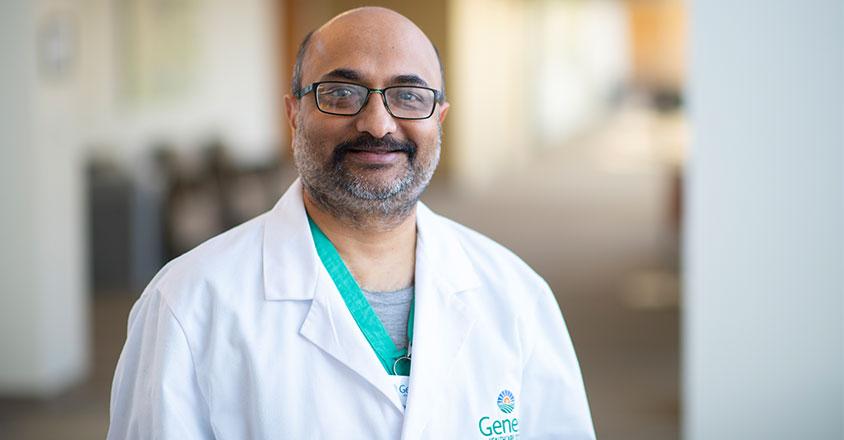
Once Charles realized he was blacking out, he contacted Genesis HealthCare for help and received an appointment to see Grant V. Chow, M.D., a fellowship-trained, board-certified cardiac electrophysiologist at the Genesis Heart & Vascular Institute.

Cardiac electrophysiology is an area of medicine that studies the electrical rhythm of the heart. Physicians specializing in cardiac electrophysiology evaluate, monitor and treat patients with irregular heartbeats or abnormal rhythms.

“Often, when a patient first comes for an evaluation, we perform an electrocardiogram (ECG). This is a quick, simple and painless test that involves attaching small electrodes to the skin,” explained Dr. Chow. “These electrodes connect to a machine that monitors the heart. We have a wide range of other cardiac tests and technologies we can use when we need to gather more information about a patient’s condition.”

Gathering more data

Charles’ evaluation suggested that an abnormal rhythm might be causing his blackouts.

However, Dr. Chow needed more information to better understand what was happening and provide the best care.

So, when Charles went home, he was given a cardiac monitor to wear 24/7 for 30 days. This would allow Dr. Chow to monitor his heart rhythm and look for a correlation with symptoms.

This also reduced the need for Charles and Katherine to drive into Zanesville for multiple follow-up appointments.

Everything was fine—until it wasn’t

“I thought I was doing fine. Then on day 28, I had another blackout,” explained Charles. On his monitor, his episode correlated with an abnormal heart rhythm where his heart rate dropped to less than 40 beats per minute.

That afternoon, June 17, 2017, Charles was admitted to the hospital and shortly afterward, Dr. Chow surgically implanted a pacemaker. This device signals the heart to beat when the heartbeat is too slow.

The surgery was a success, and after just one night in the hospital, Charles went home. His pacemaker now ensures that his heart rate never drops below a normal 60 beats per minute. In addition, the pacemaker can monitor his heart rhythm for any other issues to provide an additional layer of security.

“After the procedure, I had a lot of energy. Everything came back. My appetite even returned,” said Charles. “After a few weeks, I was able to return to work part-time.”

A temporary setback

Charles experienced no blackouts or heart issues for almost two years. But then, in April 2019, episodes of severe fatigue occurred. He was admitted to the hospital and was found to have a decrease in heart-squeezing power – a form of heart failure.

“If a patient is suffering from a serious heart condition such as heart failure, they are at a much higher risk of having recurring blackouts or feeling poorly,” explained Dr. Chow. “Unfortunately, this was the case with Mr. Dean.”

When Charles received the new diagnosis of heart failure, an upgraded pacemaker was offered to improve his heart function. The upgrade involved implanting an additional “lead,” a thin wire that connects to the device’s generator on one end and the heart on the other. In a standard pacemaker, which is what Charles initially needed in 2017, there are two leads. In contrast, in a biventricular pacemaker, the type of device that could help with his new heart failure diagnosis, there are three.

Thankful and appreciative

Since his biventricular pacemaker upgrade, Charles has not had blackouts, and his energy levels have improved. His follow-up echo in 2020 showed improvement in his heart squeezing power. He goes in for check-ups several times each year and has a cardiac monitor at home he can use to check in with Dr. Chow if he has concerns.

“Everything was so efficient at Genesis,” said Charles. “In your older years especially, it’s important to have a medical system you trust. Dr. Chow saved my life and his team keeps good track of me. I’m so thankful and appreciative.”

Genesis Heart & Vascular Care

Learn more about Electrophysiology and other life saving treatments at Genesis

Supporting Healthcare in Our Communities

The Genesis HealthCare Foundation is here to promote charitable support for Genesis HealthCare System. Find more ways you can help.

In the spring of 2017, Charles found himself taking naps frequently, but something didn’t feel quite right. “I soon realized I wasn’t actually napping, but instead was having blackouts,” explained Charles.

Exclude From Search
No

Wirth, Madeleine M.

Jeff.Mills
Submitted by Jeff.Mills on
Doctor ID
5167
Client ID
1063003175
Madeleine M. Wirth, PA-C
First Name
Madeleine
Middle Name
M.
Last Name
Wirth
Professional Titles
PA-C
Year Joined Staff
2021
Gender
Office Phone
Physician Assistant
Orthopedics

2904 Bell Street
Zanesville, OH 43701
United States

NPI
1063003176
Medical Education

2018 - 2020 Ohio Dominican University

Board Certifications

Physician Assistant

Accepting New Patients
FALSE
Is Referral Required
FALSE
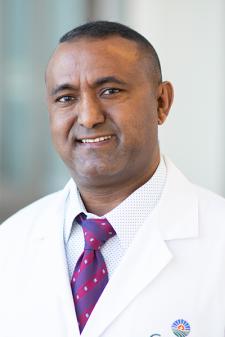
Madeline Wirth
Hide Office Hours
Off
Genesis Medical Group
Online Scheduling
Off
Genesis Medical Group
On

2904 Bell Street
Zanesville, OH 43701
United States

5167
Hide Phone
Off
Exclude From Search
No
Hide Office Hours Title
Off
Sort
2
Provider Type
Physician Assistant
Orthopedics
Show ratings?
Hide

Critical Care

Kyle.Norton
Submitted by Kyle.Norton on

Critical Care

You always want the best when it comes to healthcare, and if you ever have a medical condition that is very serious ... and potentially life-threatening, the skill and expertise of those caring for you becomes even more important.

Trained in Critical Care 24/7

Genesis has physicians specially trained in critical medicine on-hand 24-hours-a-day, 7-days-a-week. These physicians are educated and trained in the special needs of critically injured or ill patients and can be at your bedside in a matter of seconds since one is always at the hospital.

You also have the assurance that experienced registered nurses who are certified in critical care, patient care technicians and other support personnel are always nearby and attentive to your needs. Our respiratory therapy staff is also always just seconds away.

Our highly skilled, specially trained staff includes critical care intensivists and pulmonologists 24 hours a day, 7 days a week.

Abstract

Genesis has physicians specially trained in critical medicine on-hand 24-hours-a-day, 7-days-a-week. These physicians are educated and trained in the special needs of critically injured or ill patients and can be at your bedside in a matter of seconds since one is always at the hospital.

Exclude From Search
No

Genesis receives Stroke Center Recertification

Jeff.Mills
Submitted by Jeff.Mills on

Demonstrates high-quality stroke care

Zanesville, Ohio (April 19, 2021) – Genesis HealthCare System earned primary stroke recertification by the Healthcare Facilities Accreditation Program (HFAP), the nation’s original independent accreditation organization recognized by the Centers for Medicare and Medicaid Services (CMS). Primary stroke certification means that hospitals can stabilize and treat acute stroke patients, provide acute care, and administer tissue plasminogen activator (tPA), an FDA-approved treatment for ischemic strokes, as well as other therapies safely and efficiently. 

“Achieving this recertification is the result of our team’s commitment to providing fast, high-quality stroke care to patients. Our experienced physicians, nurses and staff work tirelessly to provide life-saving care to patients when they arrive at the Emergency Department, in addition to follow-up care,” said Keela Barker, Director of Rehabilitation & Ambulatory Services at Genesis. “We also dedicate numerous resources to educating people about recognizing the signs of stroke.”

HFAP stroke certification is a three-year award with a mid-cycle review at 18 months. HFAP has been certifying stroke centers since 2006 and currently offers the most options for facilities seeking stroke care certification. HFAP is the nation’s only accreditation program that certifies the full stroke continuum – stroke ready, primary stroke and comprehensive stroke.


Primary Stroke Certification Seal

Genesis HealthCare System earned primary stroke recertification by the Healthcare Facilities Accreditation Program (HFAP), the nation’s original independent accreditation organization recognized by the Centers for Medicare and Medicaid Services (CMS).

Exclude From Search
No

Bayer Heritage Federal Credit Union donates to Genesis Cancer Services

Jeff.Mills
Submitted by Jeff.Mills on

Funds Benefit Cancer Patients

Zanesville, Ohio (April 20, 2021) – Bayer Heritage Federal Credit Union recently donated $6,065 to Genesis Cancer Services. The money was raised by events held by credit union employees and will go toward comfort care items for patients undergoing cancer treatment at the Genesis Cancer Care Center.

“We are grateful to Bayer Heritage Federal Credit Union and its employees for their generous donation,” said Pebbles Thornton, MSN, RN, OCN, director of Genesis Cancer, Palliative Medicine and Hospice Services. “It’s efforts such as these that show we live in a community where the residents support each other through their cancer journeys.”

Shown during the $6,065 check presentation to Genesis Cancer Services are (left to right) Shala Aitken, Zanesville Branch Manager of Bayer Heritage Federal Credit Union; Pebbles Thornton, Director of Genesis Cancer, Palliative Medicine and Hospice Services; and Jerry Nolder, Executive Director of the Genesis HealthCare Foundation.

Donate to the Genesis HealthCare Foundation

Make a gift online or call 740-454-5052 to learn how to contribute to our Genesis HealthCare Foundation.

Bayer Heritage Federal Credit Union Donates to Genesis Cancer Services

Bayer Heritage Federal Credit Union recently donated $6,065 to Genesis Cancer Services. The money was raised by events held by credit union employees and will go toward comfort care items for patients undergoing cancer treatment at the Genesis Cancer Care Center.

Exclude From Search
No

Genesis receives Level III Trauma Center Reverification

Kyle.Norton
Submitted by Kyle.Norton on

Genesis Receives Level III Trauma Center Reverification


Zanesville, OH (April. 13, 2021) –The trauma center at Genesis HealthCare System has been reverified as a Level III Trauma Center by the Verification Review Committee, an ad hoc committee of the Committee on Trauma of the American College of Surgeons. This achievement recognizes the trauma center’s dedication to providing optimal care for injured patients. Genesis HealthCare System has been verified as a Level III trauma Center since 2010. The verification visit reviews and evaluates trauma care based on numerous stringent criteria that must be fulfilled but mainly focuses on its quality processes.


“We are honored to be acknowledged for the quality care that Genesis provides for our community,” said Stuart Chow, D.O., F.A.C.O.S., F.A.C.S., Medical Director of Trauma and Acute Care Surgical Services at Genesis HealthCare System. “This recognition is a testament to the teamwork and dedication of all Genesis team members, including all prehospital providers.”

The Level III Trauma Center reverification recognizes Genesis’ ability to provide prompt assessment, resuscitation, stabilization, emergency surgery, intensive care and post-hospital care of injured patients.

The American College of Surgeons is a scientific and educational association of surgeons that was founded in 1913 to raise the standards of surgical education and practice and to improve the care of the surgical patient. The College has over 72,000 members and it is the largest association of surgeons in the world. Longstanding achievements have placed the ACS in the forefront of American surgery and have made it an important advocate for all surgical patients.

The trauma center at Genesis HealthCare System has been reverified as a Level III Trauma Center by the Verification Review Committee, an ad hoc committee of the Committee on Trauma of the American College of Surgeons. This achievement recognizes the trauma center’s dedication to providing optimal care for injured patients.

Exclude From Search
No

Genesis Outpatient Pharmacy

Kyle.Norton
Submitted by Kyle.Norton on
Abstract

Our retail pharmacy, the Genesis Outpatient Pharmacy, prepares and dispenses prescriptions for patients, hospital employees, medical staff and community members. Conveniently located inside Genesis Hospital, our outpatient pharmacy can save you an extra step by filling your medications following your appointment or hospital stay. Our pharmacists, certified pharmacy technicians and support personnel work together to assure patients receive the highest quality pharmaceutical care.

Valentine's day heart attack survived

On Valentine's Day, Chris Forrestal took his wife of 34 years, Rhonda, to try a new burger place for lunch. That evening, a burning sensation began building in his chest. Considering indigestion as the culprit, Chris took an antacid, but he soon knew the mounting pain meant a bigger, more dangerous problem.

When hearts hurt

"This all started in the center of my chest, and normally with my indigestion it's a little higher. Within 10 minutes, the pain became crushing. I was sweating profusely and nauseous. I had never experienced that kind of pain before. It was intense and relentless, like an elephant sitting on my chest," Chris said.

While chest pain and tightness may first come to mind as signs of heart attacks, people can experience a variety of symptoms, such as shortness of breath, heart palpitations, lightheadedness, sweating, or pain in the neck, jaw, back, arms or shoulders.

Activate the heart heroes

Worried by Chris' intensifying symptoms, Rhonda called 911, initiating a coordinated chain of events that activated professionals on the emergency medical transportation team, Genesis Hospital's Emergency Department team, and Genesis' heart and vascular team.

“Chris was practically writhing in pain, so I called the squad. We live in the country in Norwich, and they couldn’t have gotten here any faster,” Rhonda said. “In the ambulance, they did an EKG and confirmed he was having a heart attack and then let the hospital know. When we arrived at Genesis Hospital’s Emergency Department (ED), a cardiac team of about 15 people was already in the room. I was so impressed. Everybody was in place and knew what to do. The doctor said to me, ‘This is where you want to be if there’s a problem. We’ll take care of him.’”

Timing proves critical

Chris suffered a massive heart attack originating in the left anterior descending (LAD) artery, the artery that supplies 65 to 70% of the heart’s muscle. When the LAD becomes nearly or completely blocked, the heart attack is commonly called the widowmaker

“Each minute, each second can make a big difference in a patient’s life when it comes to surviving a widowmaker,” said Alaa Gabi, M.D., fellowship-trained interventional cardiologist, at the Genesis Heart & Vascular Institute. “The quicker the patient receives treatment, the better the chance of surviving and the better outcome for the strength of the heart muscle. That’s why the response of the Genesis Community Ambulance to the ED and then to the Genesis Cardiac Catheterization Lab happens fast.”

Coordinating quick and expert care is one of Genesis’ strengths. In fact, Genesis diligently records and tracks the time from when a patient enters the hospital doors until the time they receive treatment in the cardiac catheterization lab; and Genesis’ timing proves faster than the national average.

Stopping the widowmaker

Inside Genesis’ Cardiac Cath Lab, Dr. Gabi and his team inserted a small wire into Chris’ blocked artery, crushed the hindering obstruction, and then deployed a stent to permanently hold open that area of Chris’ LAD artery.

“Dr. Gabi was just wonderful,” Chris said. “He explained everything and was reassuring during the process. After the procedure, I spent two more days at the hospital, and I had an excellent experience there. The nurses took great care of me, and everyone was informative and helpful.”

Rhonda agrees. She is a physical therapist at Genesis Rehabilitation Services, and this is the first time Rhonda and her family personally experienced the lifesaving care at Genesis.

“I felt well educated, understood everything that was going on and felt like I was part of the team. That kind of compassionate care brings peace,” Rhonda said.

After Chris’ massive heart attack, his ejection fraction rate remained low – meaning his heart wasn’t pumping out a high enough percentage of blood with each contraction. “A normal ejection fraction is around 50 or 55%, but Chris’ ejection fraction was down to 30 to 35% at the time of his heart attack,” Dr. Gabi explained.

Chris attended Genesis’ cardiac rehabilitation for 10 weeks, where he met with a team of registered nurses, exercise specialists, counselors and dietitians who help patients recover faster and return to full, productive lives.

“It really helped!” Chris said. “They explained things physically and emotionally, and they helped me build my stamina and confidence.” Dr. Gabi recently gave Chris good news. “An echocardiogram showed his heart muscle ejection fraction is back to normal,” Dr. Gabi said.

A heart-filled thanks

This year, Chris and Rhonda plan to spend Valentine’s Day at home, playing with their grandchildren. They cherish time with family and intentionally focus on nourishing hearts – emotionally and physically. Chris continues building his stamina and confidence, and he’s committed to eating healthy, exercising regularly and managing his stress levels.

“This has helped me make major changes in my life,” Chris said. “I’m so thankful for the Genesis teams. They’ve worked hard, and I certainly credit them with saving my life.”

Heart attacks can happen any day – get to the hospital fast!

“Heart attacks are unpredictable. We treat patients on Christmas Day, New Year’s Day, Valentine’s Day – any day. The important thing is that you get to the hospital as quickly as possible. Every second counts,” said Alaa Gabi, M.D., fellowship-trained interventional cardiologist, Genesis Heart & Vascular Institute.

Unfortunately, some people have delayed seeking hospital care because of fear of exposure to COVID-19. That decision can have detrimental effects.

“It’s terribly sad. I’ve had patients who have died or suffered irreversible complications because they came to the hospital too late, trying to avoid exposure to COVID-19,” Dr. Gabi said. “Please, if you have any heart attack symptoms, seek medical care immediately.”

Chris Forrestal Patient Story
Exclude From Search
No
Subscribe to